
If you manage a commercial building, you’ve probably heard the term Energy Use Intensity—or EUI—come up more and more in conversations about sustainability, compliance, and operating costs. And for good reason. EUI is quickly becoming one of the most important metrics in building performance management, shaping everything from local benchmarking regulations to tax incentive eligibility and tenant decision-making.
This guide covers everything you need to know: what EUI actually means, how to calculate it, how to bring it down, and how compliance can work in your favor rather than against you.
Key Takeaways
- EUI measures energy efficiency by building size, giving you a standardized number to compare your building’s performance against similar properties—regardless of square footage.
- The formula is simple: total annual energy consumption ÷ total floor area. What matters is what you do with the result.
- Lower is better. A lower EUI means your building is using less energy per square foot—and costing less to operate.
- EUI compliance is legally required in a growing number of jurisdictions, including Washington State, New York City, Boston, and California.
- Reducing EUI opens doors to real financial benefits: tax deductions, utility rebates, green certifications, and higher property valuations.
- Technology and operational changes work best together. LED lighting and smart HVAC systems deliver strong results, but behavioral and scheduling improvements amplify those gains.
- Regular monitoring turns data into action. Energy management software makes it practical to track EUI over time and catch inefficiencies before they become expensive.
What Is Energy Use Intensity (EUI)?
Energy Use Intensity is a measure of how much energy a building consumes relative to its size. It normalizes energy use across buildings of different sizes and types, making it possible to compare a 5,000-square-foot medical clinic to a 500,000-square-foot office tower on equal footing.
EUI is most commonly expressed in kBtu (thousand British thermal units) per square foot per year in the United States, though some tools also display it in kWh per square foot per year. The EPA’s ENERGY STAR Portfolio Manager—the most widely used benchmarking platform in the country—uses kBtu/sq ft/yr as its standard unit.
The EUI Formula
The calculation itself is straightforward:
EUI = Total Annual Energy Consumption (kBtu) ÷ Total Gross Floor Area (sq ft)
Here’s a quick example: a 50,000-square-foot office building that uses 6,250,000 kBtu of energy in a year has an EUI of 125 kBtu/sq ft/yr. According to ENERGY STAR data, the national median EUI for office buildings is around 90 kBtu/sq ft/yr—so this building has real room to improve.
Energy consumption includes all fuel sources: electricity, natural gas, steam, chilled water, fuel oil, and any other energy inputs to the building. Leaving out a fuel type will understate your EUI and skew your benchmarking results.
What’s a “Good” EUI?
There’s no single universal target—EUI benchmarks vary significantly by building type. A hospital runs 24/7 with energy-intensive medical equipment and will naturally have a much higher EUI than a warehouse. Context matters. The EPA’s ENERGY STAR program publishes median EUI values by building type, and ENERGY STAR certification is generally awarded to buildings that score in the top 25% of their peers—typically corresponding to a score of 75 or above on the ENERGY STAR 1–100 scale.
Here are approximate median EUI values for common building types, based on ENERGY STAR and CBECS (Commercial Buildings Energy Consumption Survey) data:
- Office buildings: ~90 kBtu/sq ft/yr
- K–12 schools: ~60 kBtu/sq ft/yr
- Retail stores: ~70 kBtu/sq ft/yr
- Hospitals: ~250–300 kBtu/sq ft/yr
- Warehouses: ~25 kBtu/sq ft/yr
- Hotels: ~130 kBtu/sq ft/yr
Knowing where your building stands relative to its peer group is the starting point for every EUI improvement strategy.
EUI Varies by Building Type—and That’s by Design
When you calculate EUI, it’s important to account for the operational characteristics of your specific building type. Hospitals and data centers have fundamentally different energy profiles than schools or retail spaces—and comparing them directly without context is misleading.
For commercial offices, the biggest drivers are typically lighting density, plug loads, and HVAC runtime. For healthcare facilities, continuous HVAC operation and medical equipment dominate. For industrial and manufacturing buildings, process energy can represent the majority of total consumption. Understanding which systems drive your EUI is essential for knowing where improvement investments will have the greatest impact.
Strategies for Reducing EUI
Bringing your EUI down requires a combination of operational discipline and targeted capital investment. The good news: many of the most effective strategies have relatively short payback periods and deliver compounding returns over time.
1. Start with an Energy Audit
Before investing in upgrades, understand where your energy is actually going. A professional energy audit—conducted by a certified energy auditor or your facilities consultant—analyzes utility bills, inspects building systems, reviews occupancy schedules, and uses energy modeling software to identify the highest-impact opportunities.
ASHRAE defines three levels of energy audits, ranging from a preliminary walk-through (Level I) to a detailed investment-grade analysis (Level III). Most commercial buildings benefit from at least a Level II audit, which provides specific recommendations with estimated costs and savings.
2. Optimize Building Operations—Without Spending a Dollar
Operational changes are often the fastest and least expensive way to reduce EUI. These include:
- Adjusting HVAC temperature setpoints during unoccupied hours (setback schedules)
- Eliminating “always on” lighting in low-use areas
- Scheduling high-energy equipment to run during off-peak utility rate periods
- Fixing HVAC systems running in simultaneous heating and cooling—a surprisingly common and wasteful condition called “simultaneous heating and cooling conflict”
- Engaging occupants in energy conservation behaviors, which research from Lawrence Berkeley National Laboratory suggests can reduce energy use by 5–15% in office environments
3. Upgrade to Energy-Efficient Technologies
LED Lighting: LEDs convert the vast majority of electricity into light rather than heat, making them dramatically more efficient than fluorescent or incandescent alternatives. Upgrading a commercial building’s lighting to LED—particularly when paired with occupancy sensors and daylight controls—typically reduces lighting energy use by 50–75%. Payback periods for well-designed LED retrofit projects commonly fall between two and four years.
High-Efficiency HVAC Systems: Heating, ventilation, and air conditioning typically account for 40–50% of a commercial building’s energy consumption, making HVAC upgrades one of the highest-leverage investments available. Systems incorporating variable frequency drives (VFDs) can reduce motor energy consumption by 30–50% compared to constant-speed systems by modulating output to match actual demand rather than running at full capacity continuously.
Building Envelope Improvements: Insulation upgrades, air sealing, high-performance windows, and cool roofing reduce the thermal load on your HVAC system—meaning it doesn’t have to work as hard to maintain comfortable indoor temperatures. Envelope improvements tend to have longer payback periods but deliver durable, long-term reductions in both EUI and carbon footprint.
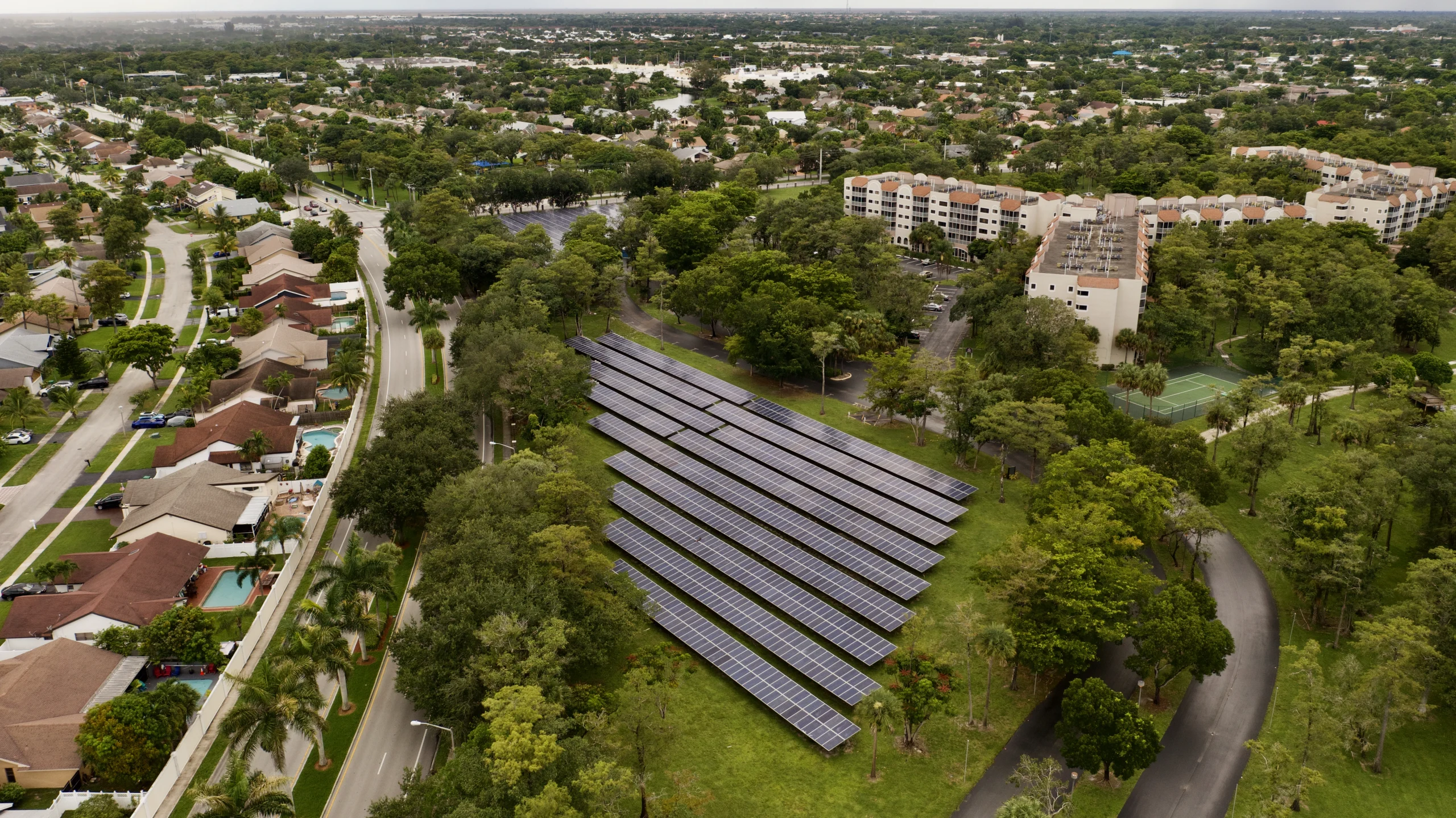
On-Site Renewable Energy: Solar PV systems don’t reduce your building’s energy consumption directly, but they reduce net energy import from the grid—which can significantly improve your ENERGY STAR score and contribute to EUI compliance in jurisdictions where renewable generation offsets are recognized.
EUI Compliance: What the Law Requires and Where
EUI compliance has moved from voluntary best practice to legal requirement in a growing number of U.S. jurisdictions. If your building is located in any of the following areas, you likely have mandatory benchmarking and/or performance obligations:
- Washington State: The Clean Building Performance Standard (CBPS) requires commercial buildings over 50,000 square feet to meet EUI targets based on building type. Compliance is phased in by building size, with larger buildings subject to earlier deadlines. Buildings that fail to comply face financial penalties, while those that meet or exceed standards may qualify for incentives.
- California: The California Energy Code (Title 24) sets stringent energy efficiency requirements for new construction and major renovations. Cities like San Francisco, Los Angeles, and Berkeley have additional benchmarking and disclosure requirements that go beyond state minimums.
- New York City: Local Law 97 requires buildings over 25,000 square feet to meet carbon intensity limits based on building type—effectively setting EUI-linked emissions caps. Buildings that exceed their limits face fines of $268 per metric ton of CO₂ over the cap, which can add up to significant annual penalties for non-compliant properties.
- Boston: The Building Emissions Reduction and Disclosure Ordinance (BERDO) requires buildings over 20,000 square feet to report energy use annually and meet declining emissions intensity standards through 2050.
- Washington, D.C.: The Building Energy Performance Standards (BEPS) require covered buildings to meet specific EUI targets and submit energy action plans if performance falls short.
This regulatory landscape is expanding. Cities and states that don’t yet have mandatory EUI requirements are actively developing them. Building owners who get ahead of compliance now will be far better positioned than those who wait for enforcement deadlines to force action.
The Financial Case for EUI Compliance
Compliance obligations aside, reducing EUI has a strong financial logic on its own. Here’s how the numbers tend to work out:
Tax Deductions Under the Inflation Reduction Act (Section 179D)
The Inflation Reduction Act expanded the Section 179D commercial buildings energy efficiency tax deduction significantly. Buildings that reduce EUI by at least 25% below the ASHRAE 90.1 baseline can qualify for deductions between $2.50 and $5.00 per square foot, depending on the level of reduction achieved and whether prevailing wage requirements are met.
To put that in concrete terms: a 40,000-square-foot office building that qualifies for a $3.50/sq ft deduction saves $140,000 on its tax bill. For building owners financing energy efficiency upgrades, this deduction can materially improve project ROI and shorten payback periods.
Reduced Utility Costs
Energy efficiency upgrades compound over time. An LED retrofit that costs $25,000 and saves $7,500 per year in electricity costs pays for itself in about 3.3 years—then delivers savings every year after that. HVAC upgrades with VFDs, smart controls, and high-efficiency equipment can yield annual savings of 20–40% on HVAC-related energy costs, depending on the system’s current condition and runtime.
Increased Property Value and Tenant Demand
The commercial real estate market is increasingly pricing energy performance into asset valuations. Research from JLL and CBRE consistently shows that sustainability is now a primary consideration for corporate tenants—particularly those with their own ESG reporting obligations. Energy-efficient buildings tend to command higher rents, lower vacancy rates, and stronger resale values than comparable inefficient properties.
ENERGY STAR certified and LEED-certified buildings in particular have documented rent premiums and occupancy advantages in most major U.S. markets.
Energy-Efficient Technologies Worth Knowing
Building Automation Systems (BAS)
A Building Automation System is the nerve center of an energy-efficient building. A properly configured BAS monitors and controls HVAC, lighting, access control, and other building systems in real time—automatically adjusting settings based on occupancy, time of day, weather conditions, and utility rate schedules.
Modern BAS platforms can flag anomalies like equipment running outside scheduled hours, zones maintaining setpoints far from building average, or meters showing unexpected spikes in consumption. Fault detection and diagnostics (FDD) capabilities, increasingly standard in newer BAS platforms, can identify energy-wasting conditions—like that simultaneous heating and cooling conflict mentioned earlier—that would otherwise go undetected for months.
High-Efficiency HVAC with Variable Frequency Drives
Variable frequency drives allow HVAC motors—including fans, pumps, and compressors—to operate at partial speed when full capacity isn’t needed. Since motor energy consumption scales roughly with the cube of speed, reducing motor speed by 20% can cut energy use by nearly 50%. For a building where HVAC represents half of total energy use, that’s a significant reduction in EUI.
Pairing VFDs with demand-controlled ventilation (DCV)—which adjusts outside air intake based on real-time occupancy using CO₂ sensors—adds another layer of efficiency, particularly in spaces with variable occupancy like conference rooms, auditoriums, and retail floors.
LED Lighting with Smart Controls
LED fixtures use 50–75% less energy than the fluorescent tubes they replace and last three to five times longer, reducing both energy and maintenance costs. The real gains come from pairing LEDs with smart controls: occupancy sensors that turn lights off in empty spaces, daylight sensors that dim artificial lighting when natural light is sufficient, and scheduling systems that enforce after-hours shutoff automatically.
Monitoring and Reporting EUI: Making It Practical
Calculating your EUI once and filing it away doesn’t accomplish much. The value of EUI tracking comes from watching it change over time—seeing where improvement efforts are paying off and where consumption is creeping back up.
Energy Management Software
Energy management software automates data collection and gives you dashboards, trend analysis, and reporting tools that make ongoing monitoring practical. Here are some of the leading platforms:
- ENERGY STAR Portfolio Manager: The EPA’s free benchmarking platform is the most widely used in the U.S. You enter utility bill data (or connect directly to utility accounts via automatic data exchange), and Portfolio Manager calculates your EUI, generates your ENERGY STAR score, and lets you compare performance across your entire building portfolio. It’s also the reporting platform for most municipal benchmarking ordinances.
- Lucid BuildingOS: A real-time building performance platform that aggregates data from meters, sensors, and BAS systems into a unified dashboard. Particularly useful for portfolio managers who need a single view across multiple facilities.
- Schneider Electric EcoStruxure™ Energy Hub: Comprehensive energy management with AI-driven analytics to identify inefficiencies and forecast consumption. Integrates directly with Schneider’s BAS and power monitoring hardware.
- Honeywell Energy Management Solutions: Combines sub-metering, data analytics, and reporting tools with integration into Honeywell’s broader building automation ecosystem.
- Accruent: A facilities management platform that includes energy tracking alongside maintenance management, lease administration, and capital planning—useful for organizations managing EUI alongside broader FM objectives.

Regulatory Reporting Requirements
If your building is in a covered jurisdiction, annual EUI reporting isn’t optional—it’s a legal obligation. Deadlines, formats, and covered building thresholds vary by location, so check with your local energy office or municipality directly. Most jurisdictions accept or require data submitted through ENERGY STAR Portfolio Manager, which simplifies the process if you’re already using it for internal benchmarking.
Green Certifications and Financial Incentives
Accurate, consistent EUI tracking also positions you for certification programs and incentives that require demonstrated performance data:
- ENERGY STAR Certification: Awarded to buildings that score 75 or above on the ENERGY STAR 1–100 scale, reflecting top-quartile energy performance among peer buildings. Requires annual recertification, which keeps you accountable and up to date.
- LEED Certification: Energy performance—measured in part through EUI—contributes points toward LEED certification levels (Certified, Silver, Gold, Platinum). A lower EUI relative to baseline supports higher certification levels and can be achieved through Optimize Energy Performance credits.
- Washington State CBPS Incentives: Buildings that meet or exceed the Clean Building Performance Standard targets can qualify for grants and financial incentives from the Washington State Department of Commerce.
- NYC Local Law 97 Compliance Pathways: Buildings with documented EUI reductions may access alternative compliance pathways and avoid per-ton emissions penalties, which will escalate significantly in the 2030 compliance period.
Achieving EUI Compliance: Where to Start
EUI compliance can feel complicated—especially when you’re navigating multiple fuel sources, regulatory reporting deadlines, tenant sub-metering, and capital budget constraints at the same time. But the underlying logic is straightforward: understand how your building uses energy, identify where it’s using more than it should, and make targeted changes that bring consumption down.
The organizations that handle this best don’t treat EUI as a compliance checkbox. They treat it as an operational indicator—one that tells them something real about how efficiently their facilities are running. That mindset shift is what turns a regulatory burden into a genuine business advantage.
Partner with Left Coast Facilities Consulting
At Left Coast Facilities Consulting, we help building owners and facility managers across Clark County, WA and the Pacific Northwest navigate EUI compliance with clarity and confidence. Whether you’re working toward Washington State Clean Building Performance Standard compliance, preparing for ENERGY STAR certification, or simply trying to get a handle on where your energy is going—our team provides practical, tailored guidance that cuts through the complexity.
We handle the technical detail so you can focus on running your organization. Get in touch with us today to start the conversation.